Save big with our exclusive discounts!
How to Help Children Hold a Pencil Comfortably
Learn how teachers and parents can build pencil readiness through play, fine-motor activities, supportive guidance, and meaningful early-writing practice.
EDUCATION
Becky
9/4/20268 min read

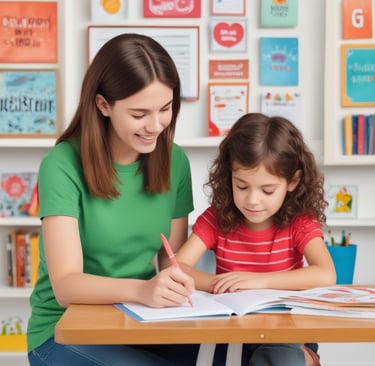
Learning to hold a pencil is not a single skill that children master overnight. It develops gradually as children build hand strength, coordination, posture, visual-motor skills, and confidence.
It is understandable that adults want to see a neat, efficient pencil grip. However, correcting a child’s fingers repeatedly can sometimes make drawing and writing feel stressful. A more supportive approach is to create plenty of opportunities for children to play, make marks, use their hands, and experiment with different tools.
The goal is not to force every child into one “perfect” grip. The goal is to help children use a writing tool comfortably, with enough control to express their ideas and take part in early-writing activities.
1. Understand What Pencil Readiness Involves
Before children can write comfortably, several physical and developmental skills are coming together. These include:
- Fine-motor strength: The small muscles in the hands and fingers need enough strength for grasping and controlling a tool.
- Finger coordination: Children gradually learn to move their fingers separately instead of moving the whole hand as one unit.
- Wrist stability:A stable wrist helps the fingers make smaller, more controlled movements.
- Visual-motor coordination:Children need to coordinate what they see with how they move their hands.
- Postural control: A steady body and supported shoulders make hand movements easier.
- Confidence and attention: Children are more willing to practise when mark-making feels enjoyable and achievable.
These skills do not all develop at exactly the same time. One child may be eager to draw but tire quickly, while another may have strong hands but need more practice with visual control. Observing the whole child gives adults a better understanding of what support is needed.
2. Begin With a Stable, Comfortable Position
Pencil control can be much harder when a child is struggling to keep their body steady. Before focusing on finger placement, check the child’s overall position.
Try to provide:
- Feet supported on the floor or on a stable footrest
- A chair and table that are a comfortable height
- Shoulders relaxed rather than raised
- The writing surface positioned so the child can see it easily
- The non-writing hand holding the paper still
- Enough space for the child to move their arm freely
Paper can be placed at a slight angle rather than directly square to the child. The best angle may vary depending on whether the child is left- or right-handed and what feels natural for them.
A stable position does not need to be rigid. Children should still be able to shift slightly and remain comfortable. The aim is to reduce unnecessary effort so they can focus on drawing and writing.
3. Offer a Variety of Writing Tools
Children do not need to practise with a standard long pencil every time. Different tools provide different sensory and movement experiences, and some may be easier for a child to control.
Offer options such as:
- Chunky crayons
- Short crayons or half-size pencils
- Triangular pencils and crayons
- Chalk
- Paintbrushes
- Washable markers
- Dry-erase markers
- Finger-paint tools
- Small sticks for drawing in sand or other sensory materials
Short tools can encourage children to use their fingers rather than gripping tightly with the whole hand. Chunky tools may be easier for children who are still developing hand strength.
The important point is to offer choices without turning the choice into a test. A child’s preferred tool can be a useful starting point for building confidence.
4. Build Hand Strength Through Play
Many activities that look like simple play give children valuable practice with grasping, squeezing, pinching, turning, and coordinating both hands. These movements can support later pencil control without requiring formal handwriting practice.
Try activities such as:
- Squeezing, rolling, and pinching playdough
- Building with blocks
- Connecting construction toys
- Using pegs or clothes pins
- Threading beads or pasta
- Picking up small objects with child-safe tongs
- Completing simple puzzles
- Opening and closing containers
- Tearing, scrunching, and gluing paper
- Using droppers to transfer water
- Spraying water outdoors with a small spray bottle
Keep safety in mind when using small objects, especially with younger children. Choose activities that match the child’s age and supervise as needed.
These activities are most effective when they remain enjoyable. A child does not need to know that an activity is “building pencil skills.” The movement and repetition are doing useful work in the background.
5. Encourage a Functional Grip Without Forcing It
There is no need to reposition a child’s fingers every few seconds. Early grips often change as children develop strength and coordination. Some children may use an immature grip for a while and gradually move toward a more efficient one as their skills grow.
Adults can support development by:
- Modelling a relaxed pencil grip
- Offering short or triangular writing tools
- Keeping the child’s hand relaxed rather than tightly clenched
- Using simple cues such as “gentle fingers” or “let the pencil rest”
- Demonstrating how the other hand can hold the paper
- Pausing when the child shows signs of fatigue
Avoid turning pencil grip into a constant correction. If the child is comfortable, making controlled marks, and able to participate, the grip may be working well enough for that stage of development.
The most useful question is not, “Does this look exactly right?” It is, “Can the child use the tool comfortably and with growing control?”
6. Use Vertical and Large-Scale Surfaces
Drawing and writing on a vertical surface can encourage children to use their shoulders, arms, wrists, and fingers in different ways. It can also make mark-making feel fresh and playful.
Consider offering:
- An easel
- Paper taped to a wall
- A chalkboard
- A whiteboard
- A window with washable markers
- A large sheet of paper fixed to an upright surface
- Paint on an outdoor fence or suitable board
Vertical activities can help children practise reaching, crossing the middle of the body, and controlling larger movements. They are especially useful for children who lose interest when asked to sit at a table for too long.
Large movements are an important foundation. Children often need to develop broad control before smaller pencil movements become comfortable.
7. Make Mark-Making Playful and Meaningful
Early writing should not be limited to tracing lines or completing worksheets. Children are more likely to practise when their marks have a purpose.
Invite them to:
- Draw roads for toy cars
- Make a map for a treasure hunt
- Create a menu for a pretend restaurant
- Draw a face, animal, or favourite object
- Add labels to a block construction
- Make signs for a role-play area
- Draw a picture and dictate a sentence for an adult to write
- Write a message to a family member
- Create patterns, spirals, waves, and zigzags
You can introduce simple pre-writing movements through play. For example, a child might draw rain falling, waves moving, a snake travelling, or a car following a road. These images give children a reason to practise different lines and movements.
Focus on what the child is communicating rather than judging the appearance of every mark. Meaningful mark-making helps children understand that writing and drawing are ways to share ideas.
8. Keep Practice Short, Regular, and Positive
Young children often benefit more from brief, regular opportunities than from one long handwriting session. A few minutes of enjoyable drawing or writing can be enough, especially when it is part of an activity the child already enjoys.
For example:
- Invite the child to sign a piece of artwork.
- Ask them to write the first letter of a character’s name.
- Let them make a shopping list during pretend play.
- Encourage them to draw a picture before adding one or two marks or letters.
- Provide a small writing area that children can choose to visit independently.
End the activity before the child becomes exhausted or frustrated. Positive experiences help children build willingness to try again.
Praise specific effort and progress rather than using general comments alone. You might say:
- “You kept your paper steady with your other hand.”
- “I noticed you made those circles very carefully.”
- “You found a comfortable way to hold the crayon.”
- “You added lots of details to your drawing.”
This type of feedback helps children notice useful strategies without making them feel evaluated at every moment.
9. Adapt Activities to the Individual Child
Children develop at different rates and may respond differently to the same activity. One child may enjoy playdough, while another prefers construction toys, painting, or outdoor chalk.
When adapting activities, consider:
- Whether the tool is too large or too small
- Whether the child is pressing too hard
- Whether the task is too long
- Whether the child is sitting comfortably
- Whether the activity is too easy or too difficult
- Whether the child has a clear reason to make marks
- Whether sensory factors such as texture, noise, or mess affect participation
Offer choices and observe what helps the child stay relaxed and engaged. A small change in tool, position, surface, or task length can make a significant difference.
10. Know When to Seek Additional Advice
Occasional awkwardness, changing grips, or reluctance to write can be a normal part of early development. However, adults should pay attention when difficulties are persistent or significantly affect the child’s participation.
It may be helpful to discuss observations with the child’s teacher, family, paediatrician, or an occupational therapist if the child:
- Regularly reports pain while drawing or writing
- Becomes extremely tired after a short activity
- Avoids drawing and mark-making altogether
- Uses very strong or rigid pressure
- Has ongoing difficulty coordinating both hands
- Shows persistent frustration despite supportive, playful practice
- Has difficulty with many everyday hand tasks as well as writing
A professional can look at the child’s broader development and suggest appropriate support. The purpose is not to label the child or rush development, but to understand what may make participation easier.
What Adults Should Avoid
Supportive pencil practice is just as much about what adults avoid as what they provide.
Try not to:
- Insist on one grip before the child is ready
- Compare the child’s writing with another child’s work
- Use long, repetitive handwriting drills
- Correct every mark or finger movement
- Take over the child’s drawing
- Treat messy attempts as failure
- Make writing practice a daily source of conflict
Children need room to experiment. A calm adult who notices progress can help protect the child’s confidence while skills are still developing.
Frequently Asked Questions
When should a child learn to hold a pencil?
There is no single age when every child should use the same pencil grip. Children typically move through several stages as their strength, coordination, and control develop. Adults should provide opportunities for play and mark-making while looking at comfort and progress rather than expecting an identical grip at a particular age.
What is the best pencil grip for preschoolers?
The best grip is one that allows the child to make marks with reasonable comfort and control without excessive tension or fatigue. A commonly used mature grip may develop over time, but young children should not be forced into it before they are ready.
Should adults correct an immature pencil grip?
Gentle modelling and supportive suggestions can help, but constant correction may create tension and reduce enjoyment. If a child is comfortable and able to control the tool, focus on meaningful practice and fine-motor play. Consider additional advice if the child experiences pain, fatigue, or persistent difficulty.
What activities improve pencil control?
Playdough, peg activities, threading, construction toys, puzzles, tongs, drawing on vertical surfaces, painting, and playful mark-making can all support the strength and coordination needed for pencil control.
How can parents and teachers work together?
Share observations rather than focusing only on the child’s finished writing. Discuss which tools, positions, and activities the child enjoys, what causes fatigue, and which strategies help the child participate confidently. Consistent encouragement at home and in the classroom can make early writing feel more manageable.
Conclusion: Build Confidence One Small Movement at a Time
Helping a child become comfortable with a pencil is not about achieving a perfect grip as quickly as possible. It is about creating the physical, emotional, and practical conditions that make writing feel achievable.
Give children opportunities to strengthen their hands through play. Offer different tools and surfaces. Make mark-making meaningful. Keep practice brief and positive. Most importantly, watch the child’s comfort, effort, and growing control.
When teachers and parents replace pressure with purposeful play, children can develop early-writing skills while also learning that their ideas are worth putting on paper.
Start with one activity today: offer a child a short crayon, a large sheet of paper, and an invitation to draw something meaningful to them. Observe what helps them feel comfortable, then build from there.
Which pencil-readiness activity will you try first? Choose one playful activity.
shopkieta printables
Follow us on social Media for more tips
Contact
support@shopkieta.com
© 2026. All rights reserved.